retaining wall
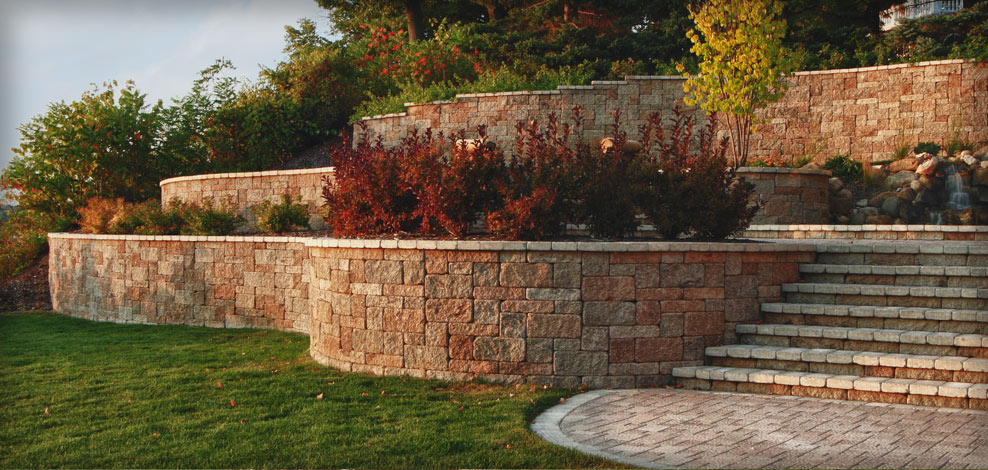
A retaining wall is a wall built to prevent soil from falling or sliding down from a higher elevation to a lower elevation. In a residential context, you probably think of a retaining wall as a garden wall. In houses built on hills, it can go around the outside of the garden to prevent the soil from the garden from falling onto the street below. Walls that surround elevated, large planters are actually retaining walls, as well.
The types of retaining walls are determined not by how they look from the outside but by how they are engineered. A gravity wall is a retaining wall that keeps the soil in place by its own weight. It is vertical on the soil side and angled on the street, so that it is narrower at the top and wider at the bottom. It also extends slightly below the ground at street level. These types of walls were the most common type in the early 20th century, but now there are even more stable types of retaining walls available. Piling walls are much narrower than gravity walls, and they are vertical on both sides. They extend deep into the ground, and they are held in place by long piles which, in turn, are held in place by soil. A cantilever wall is shaped like a bookend and functions similarly; its lever arms at the bottom fits into the soil the way that a bookend holds the books in place by a lever arm that slides under the books. Some cantilevered walls are shaped like an upside down “T”, with horizontal pieces extending in both directions. An anchored wall is narrow and vertical on both sides like a piling wall, but instead of piles below ground level, it is held in place by anchors that extend into the soil that it is trying to stop from falling. Many retaining walls in the yards of houses are built from interlocking concrete blocks. Retaining walls made of more elegant materials are also available. We at Elkhart Landscape can build one or more retaining walls in your front yard to give it a terraced look. We can even install lighting into your retaining wall to give your garden or yard an elegant look. You cannot, however, install a fire pit in or near a concrete wall, since high temperatures can cause the concrete wall to collapse. ' It is possible to build small retaining walls as a do it yourself project. Retaining walls that are suitable as summer DIY projects are small retaining walls, not more than four feet tall, especially those made of blocks. Anything taller than that requires the expertise of a professional engineer. All of our products have been thoroughly tested for safety and are made of durable materials. We offer full service installation of retaining walls. In the rare event that they require maintenance, we also offer that. Call us or email us today to discuss your options for building a retaining wall on your property. |
|
- Home
- About
-
Services
- Curbside Leaf Pick Up
- Excavating
- Fence Installation
- Fertilizing
- Garden Railroading
- Garden Tilling
- Grounds Maintenance
- Hardscaping
- Hydroseeding
- Landscaping Construction
- Landscaping
- Lawn Installation
- Mowing
- Pond Installation
- Pondless Waterfall
- Power Washing
- Putting Green
- Retaining Wall
- Snow Removal
- Sod Installation
- Staining Decks
- Tree Service
- Trimming
- Weed Control
- Contact Us

- Home
- About
-
Services
- Curbside Leaf Pick Up
- Excavating
- Fence Installation
- Fertilizing
- Garden Railroading
- Garden Tilling
- Grounds Maintenance
- Hardscaping
- Hydroseeding
- Landscaping Construction
- Landscaping
- Lawn Installation
- Mowing
- Pond Installation
- Pondless Waterfall
- Power Washing
- Putting Green
- Retaining Wall
- Snow Removal
- Sod Installation
- Staining Decks
- Tree Service
- Trimming
- Weed Control
- Contact Us
|
Elkhart Landscape
Email: [email protected] Phone: 574-607-4750 URL: www.elkhartlandscape.com Address: Elkhart, IN Location |
Terms Of Service & Privacy Policy |
Landscaping and Snow Removal Service in Elkhart, IN !! Call: 574-607-4750